Corporate Tax for Sole Establishments in UAE
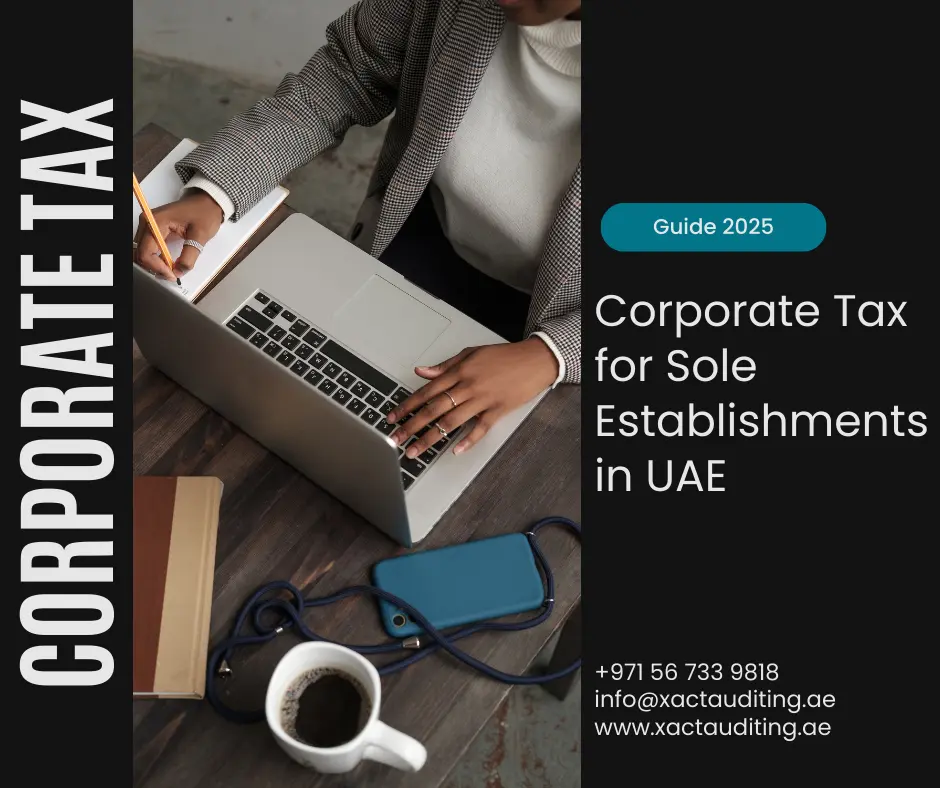
Corporate tax registration for sole establishments in UAE is mandatory only when their annual income exceeds AED 1 million within a calendar year. Businesses with a turnover less than AED 1 Million do not have to register for corporate tax in UAE.
Paying corporate tax in the UAE is now part of business life. Many people think it’s only for big companies. That’s not true. If you run a sole establishment, the rules also apply to you.
If the turnover from business activities in the UAE exceeds AED 1 million in a Gregorian calendar year, a natural person (resident or non-resident) must comply with the Corporate Tax Law. This includes registering for Corporate Tax with the FTA, filing Corporate Tax returns, and paying the applicable tax.
Let’s break it down in simple words. No legal talk. Just what you need to know in 2025.
What is a Sole Establishment in the UAE?
A sole establishment is a business owned by one person, with no partners or shareholders, just you.
You might be a:
- Freelancer
- Consultant
- Online seller
- Designer
- Influencer
If your name is on the trade license as a 100% shareholder of the company and you run the show, that’s a sole establishment.
Applicability of Corporate Tax to Sole Establishments
Maybe yes, maybe no. It depends on how much you earn.
As per Federal Tax Authority, businesses in UAE must register and pay corporate tax if:
- You turnover is more than AED 1 million in a year
- Your income comes from business activity in UAE
- You are not claiming Small Business Relief.
Corporate Tax Rates in UAE (2025)
Here’s how tax is charged:
Net Profit (AED) | Corporate Tax Rate |
0 to 375,000 | 0% |
Over 375,000 | 9% |
This tax is on your profit, not your total income. So, if you made AED 800,000 and spent AED 500,000 on rent, staff, or tools, your tax is only on the remaining AED 300,000. That’s below the limit. So, you pay zero tax.
Corporate Tax Registration Deadline
- Deadline: 30 June 2025
- Applies to: Businesses that started before 1 January 2024
- Penalty for late registration: AED 10,000
- Deadline: Within 9 months after the end of your financial year
- For example, if your financial year ends on 31 December 2024, your return must be filed by 30 September 2025
Tax Payment Deadline
- Same as return filing deadline (i.e. 9 months after year-end)
What is Small Business Relief?
The UAE helps small business owners with a rule called Small Business Relief. If your revenue is under AED 3 million, you are eligible to apply.
You won’t pay tax. You won’t need an audit report. But you still need to:
- Register for tax
- Keep records
- File a corporate tax return
This relief is valid until the end of 2026. So, take it if you qualify.
Documentation required for corporate tax filing for sole establishment
After the corporate tax registration in UAE, keep these papers ready:
- Emirates ID
- Trade license
- Passport
- Business bank account info
- Profit and loss statement
- Details of your business type
All of this can be uploaded to EmaraTax, the online portal for tax.
How to File Corporate Tax as a Sole Establishment?
Corporate tax filing is not difficult, but you must follow each step carefully. Here’s a basic guide:
Step 1: Register
Do this through EmaraTax. It takes 10–15 minutes.
Step 2: Prepare Your Numbers and Financials
Add up your revenue and costs. Ensure that your records align with your bank statements.
Step 3: Submit the Corporate Tax Return
Fill out the tax form online. If you made a profit above AED 375,000, the portal will calculate your tax.
Step 4: Make the Corporate Tax Payment
Pay through GIBAN or Credit/Debit card options given by the tax portal.
Mistakes to Avoid by Natural Person
Sole traders often make small mistakes that lead to big trouble. Be careful of these:
- Ignoring tax just because you’re “small”
- Mixing personal and business money
- Filing after the deadline
- Not keeping receipts or invoices
- Forgetting to claim Small Business Relief.
- Registering under corporate tax without exceeding AED 1Million Turnover threshold
How Xact Auditing Supports Sole Establishments under Corporate Tax?
You don’t have to do it alone. At Xact Auditing, we help freelancers, consultants, and other small business owners register, file, and stay compliant to avoid penalties. Our team is based in the UAE. We understand the local laws. We keep your work private and secure.
Let us help you:
- Check if you need to pay tax
- Register without errors
- File returns on time
- Get the right advice
FAQs
Q. What income is considered taxable for natural persons?
Only income derived from a Business or Business Activity conducted in the UAE by a natural person is subject to Corporate Tax.
Q. When does a sole establishment need to register for corporate tax?
Once the turnover from business activities in the UAE crosses AED 1 million in a calendar year, registration with the Federal Tax Authority (FTA) becomes mandatory.
Q. Can non-resident sole establishments be taxed in the UAE?
Yes, if they generate income from UAE-based business activities exceeding AED 1 million annually, they are required to register and pay corporate tax.

We are specialized in offering services of audit, assurance, taxation, bookkeeping, feasibility study, set-up new business, accounting software, tax services, preparing financial statements and other accounting and management consultancy services for public and private companies across the UAE. We are a fully integrated and professional audit firm.
 Previous Post
 Next Post