Importance of Audit for Corporate Tax Filing in UAE
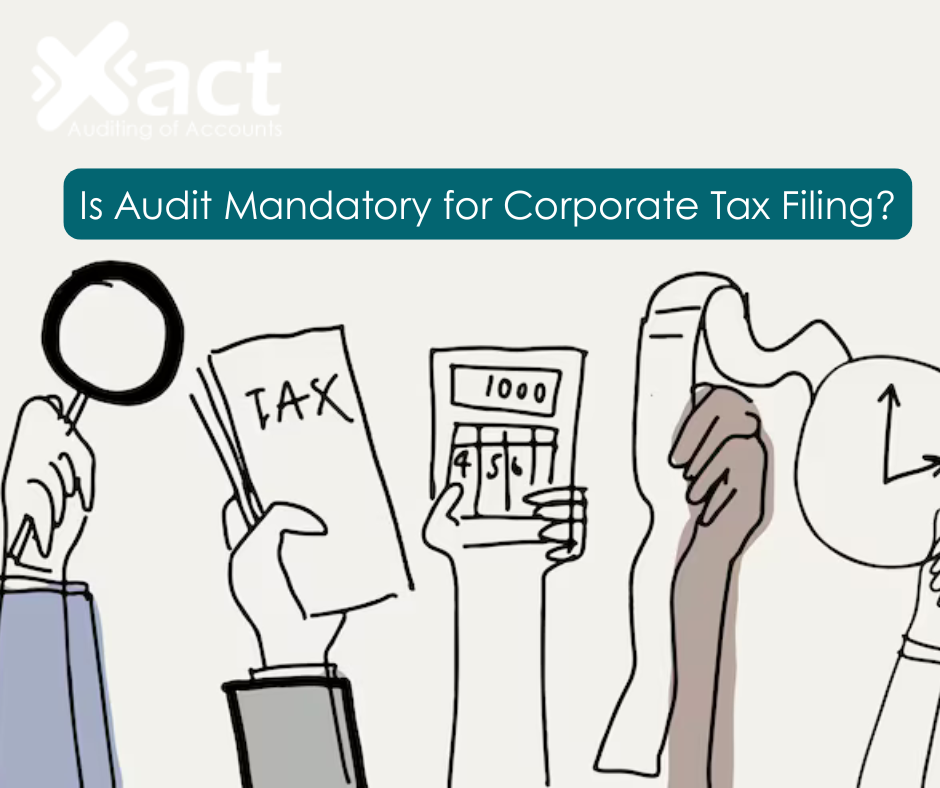
Audit for corporate tax filing in UAE ensures financial statements comply with UAE Corporate Tax Law and FTA regulations before submission. Audit for Corporate Tax Filing in UAE refers to the professional examination of financial statements and accounting records to ensure compliance with UAE Corporate Tax Law and Federal Tax Authority (FTA) regulations. Businesses must ensure IFRS-compliant financial reporting, proper documentation, and accurate tax return submission to avoid corporate tax fines and penalties and legal exposure.
A financial audit for corporate tax filing plays a central role in proving accuracy, transparency, and compliance. Whether you are a mainland company, a free zone entity, or part of a growing group structure, understanding how audits support corporate tax filing can save time, reduce risk, and protect your business reputation.
Corporate Tax Audit Requirements Under UAE Law
As per Ministerial Decision No. 82 of 2023, companies are required to submit audited financial statements to comply with UAE Corporate Tax regulations. The purpose of an audit is to verify that the financial statements are accurate, properly prepared, and handled with confidentiality. It also enhances transparency and builds trust among investors and other stakeholders. The audit report provides an independent opinion on the accuracy and reliability of the company’s financial information.
Under UAE Corporate Tax regulations, certain businesses are legally required to prepare and maintain audited financial statements. These include:
Taxable Persons generating revenue exceeding AED 50 million during the relevant tax period.
Qualifying Free Zone Persons, regardless of their revenue threshold.
Ensuring compliance with these requirements is essential to meet regulatory obligations and avoid potential penalties. It is optional for the businesses generating less than AED 50 million to upload financial audit report while submitting corporate tax return.
Key Financial Statements Reviewed During the Audit
A financial audit for corporate tax filing focuses on a complete set of financial statements prepared in line with accepted accounting standards.
These typically include:
- Statement of financial position
- Statement of profit or loss / Income statement
- Statement of cash flows
- Statement of changes in equity
Auditors review these documents to ensure they present a true and fair view of the company’s financial position.
Financial Statment Accounting Standards for Corporate Tax
Most UAE businesses prepare financial statements under International Financial Reporting Standards. Smaller entities may use IFRS for SMEs where applicable. The chosen framework must be applied consistently, as inconsistencies often lead to audit adjustments and tax complications.
Auditors also check that accounting policies align with UAE corporate tax regulations and that tax adjustments are correctly applied.
| Taxable Person Condition | Applicable Accounting Standard |
|---|---|
| Revenue exceeds AED 50 million or a Qualifying Free Zone Person | International Financial Reporting Standards (IFRS) |
| Revenue below AED 50 million | International Financial Reporting Standards for SMEs (IFRS for SMEs) |
The Financial Audit Process for Corporate Tax Filing
Understanding the audit process helps businesses prepare in advance and avoid last-minute issues.
Planning and Risk Assessment
The auditor reviews the business model, revenue streams, and tax exposure to identify high-risk areas.
Review of Records and Transactions
Financial records, invoices, contracts, and bank statements are examined to validate reported figures.
Audit Adjustments and Findings
Any errors or misstatements are discussed with management and corrected before finalizing the audit report.
Issuance of Audit Report
The final audit report supports the corporate tax return submitted to the Federal Tax Authority.
Understanding Financial Audit for Corporate Tax Filing
A financial audit for corporate tax filing is an independent review of a company’s financial statements to confirm that income, expenses, assets, and liabilities are correctly recorded. These audited figures are then used as the basis for calculating corporate tax payable to the Federal Tax Authority.
In the UAE, corporate tax rules require certain businesses to maintain audited financial statements. This is especially relevant for companies exceeding specific revenue thresholds and for qualifying free zone persons seeking to benefit from preferential tax treatment.
Key aspects in the preparation of CT Financial statements in UAE
Corporate tax is calculated based on accounting profit, not estimated figures. This is why an audit becomes so important. A properly conducted audit supports tax filings by:
- Verifying the accuracy of reported income and expenses
- Ensuring compliance with IFRS or IFRS for SMEs
- Reducing the risk of disputes with tax authorities
- Providing confidence during FTA reviews or audits
For many UAE businesses, audited financials act as a safety layer that protects against penalties and reassessments.
Preparation and Compliance
Many UAE businesses struggle with audits due to avoidable issues. These include:
- Poor bookkeeping and missing documentation
- Incorrect revenue recognition
- Misclassification of expenses
- Lack of understanding of corporate tax adjustments
Addressing these issues early reduces audit delays and tax risks.
How a Financial Audit Adds Value Beyond Tax Filing
A financial audit for corporate tax filing is not only about compliance. It also provides insights that help businesses grow.
Audits can:
- Improve internal controls and financial discipline
- Highlight inefficiencies and cost leakages
- Strengthen credibility with banks and investors
- Support strategic planning and expansion decisions
For growing UAE companies, these benefits often outweigh the cost of the audit.
Choosing the Right Audit Firm in the UAE
Selecting the right audit firm is critical. Businesses should look for firms with strong UAE tax knowledge, free zone experience, and a practical approach to compliance.
A good audit partner does more than issue a report. They explain findings clearly and help management understand how audit outcomes impact corporate tax obligations.
Businesses can simplify the financial audit process by preparing in advance. Helpful steps include:
- Maintaining updated accounting records
- Reconciling accounts regularly
- Reviewing tax positions before audit commencement
- Working with experienced accounting and tax professionals
Preparation reduces audit time and ensures accurate corporate tax filing.
Partner with Xact Auditing for Confident Corporate Tax Compliance
Xact Auditing supports UAE businesses with reliable financial audit services tailored for corporate tax filing. Our team understands local regulations, free zone requirements, and FTA expectations. We work closely with clients to ensure financial statements are accurate, compliant, and ready for tax submission.
With Xact Auditing, businesses gain clarity, confidence, and peace of mind throughout the audit and tax filing process. Have questions or need assistance related to audit or corporate tax? Contact Us and our team will be happy to help.
Corporate Tax Services
Xact Auditing is offering following corporate tax services across UAE:

Zuha is a content writer at Xact Auditing, specializing in UAE accounting, audit, VAT, and Corporate Tax content. She delivers research-driven, clear insights by simplifying complex regulatory and compliance topics for UAE businesses. Her work is developed in collaboration with chartered accountants and tax professionals, ensuring alignment with IFRS, ISA, and FTA regulations. Content is written by Zuha and reviewed by Xact Auditing’s audit, accountants and tax experts for accuracy and compliance.
 Previous Post